

The future of work and the sovereign coach
This post is essay one from a series written by 360 founder Justin Buckthorp. You can read these articles first by following him on Substack.
It’s 9.30pm on Tuesday and you’re still answering client messages on WhatsApp. Part of you doesn’t mind because you love your work and want to help people. But there is another part of you that finds it all too much.
You know it. You carry it all. The conversations, the context, the story, the concerns, the goals, and the latest question about an Instagram post that a client sent you because they didn’t know who else to ask. It’s all there in your head. And you carry it for every client you have.
You’re a good coach. You invested a lot in becoming excellent at what you do. Yet somehow it still doesn’t feel enough. You’re always on. You rarely switch off. And you know in your heart that it feels impossible to grow your income and your care without burning yourself out.
What if the exhaustion isn’t your fault?
After 25 years of coaching in health, wellness and professional sport, I’ve seen every trend you can imagine. I’ve had amazing moments. I’ve made most of the mistakes. And I’ve come to understand that what’s happening to you is a structural problem not a “you” problem.
Three forces are dismantling coaching as we know it right now. Let me show you what they are, and what we can do about them.
Force one: wearables are replacing you
For a long time, you were the main link between a client and their wellness goals. They’d look to you for feedback and support. Consumer wearable giants are on a mission to change that. They want to be the start, the middle and the end of the conversation. Measure the client, then tell them what to do. A closed loop with one person in it, and that person isn’t you.
These companies have nothing against coaches. They just see them as irrelevant. They want to be the whole-person platforms that cut out the middleman and keep the client locked into their device. And they’re building toward it: labs, biomarkers, coaching features in the app. The direction is clear. They want your role.
There’s a strange irony to this, too. Right now, clients rely on coaches to interpret red scores, recovery indexes and other data because the devices themselves struggle to turn data into meaning. In effect, you are working for free on behalf of these wearable giants because of a product’s deficiencies. I want it to be different, and I’m here to stick up for coaches
Force two: AI is cannibalising your knowledge
If wearables were not disruptive enough, there’s a second force, and you already know it. For as long as coaching has existed, professionals were paid for a level of expertise that clients could not get alone. AI has changed that forever.
I feel for coaches because the best ones tend to invest heavily in their education over their career. We are people helpers. That means leaning into personal development and the life sciences so we can give the most value to the person in front of us.
I know this myself. Since 2001, I’ve trained across health, fitness, nutrition, performance, coaching, and more. I remember flying back and forth to the US several times a year with the Institute for Functional Medicine back in the early 2010s. Those trips were important to me. I wanted to get an edge in my understanding of proactive health so I could better serve my clients with an evidence-based medicine approach. It was a big investment.
AI now gives your client a version of that knowledge for free.
Your client’s question about creatine, protein, sleep, gut health or cortisol gets answered in seconds. They can get a beautiful-looking training programme in minutes. They can talk through personal issues with AI for hours if they want. In the last year, AI has closed so many gaps of competence across the life sciences. It can now give good answers across many subjects that our clients care about while they sit in traffic and talk to AI on their phones.
Meanwhile, much of the coaching industry is still trying to work out what to do about it.
Here’s what has actually changed. A client comes in and mentions something they read. You can tell they didn’t get it from you because they have already asked a chatbot and watched three reels on the way over. And the question they’re carrying isn’t really the one they’re asking you, because they’ve already had a version of the answer.
The version they have is general. It was written for everyone and therefore nobody. The supplement that works, the sleep protocol that helped, the training block that got results: all of it perhaps true, none of it theirs.
Even if the client added context to the Chatbot to get a more bespoke answer, the challenge for them is the same: Is this the right answer for me right now, with my history, goals, body, lifestyle and season of life? That is the whole thing now. Precision. Relevance. Trust.
Force three: you have no infrastructure
The third force is different. It’s missing infrastructure, the thing every other profession takes for granted, that sits underneath your business in a world which is increasingly complex.
An airline pilot has clear operating procedures from the moment they turn up at one airport to the moment they leave another. Medics, lawyers, consultants, accountants. Mature industries all have the same thing: a clear map and way of doing things that helps everyone.
And what do we have in coaching? Nothing.
If you’re a coach, you’ll have felt this firsthand. Infinite inputs coming at you all day long. Multiple channels of communication open all the time. Clients messaging day and night. Giving away your time to support clients between sessions because nobody else holds the context like you do. A world of social media that leaves your clients constantly second-guessing themselves, and occasionally the plan you sent them.
The more successful you become, the harder it gets. You carry more, and more, and more. You become quietly trapped by your own success. I’ve seen this in so many brilliant colleagues over the years, and it ends up sapping the joy that caused you to join the industry in the first place. You end up as the successful bottleneck: a full diary and a flat income, with no system underneath either.
These three forces don't work alone
Individually, each of them is a problem. Together, they create a wall. Wearables take the relationship. AI takes the knowledge. And without infrastructure, you have no strong foundations to respond to either. You end up carrying everything in your head and answering it for free, against machines that don’t sleep.
I do not write any of this to be negative. I love coaching, and I love coaches. Every day we have the opportunity to point people towards possibility. We help people work towards their potential and enjoy more of the life they want.
My point is that as a coach, you deserve the same. Your life matters too. And that’s why I’m writing this.
Because the profession is splitting, and it’s splitting now.
The profession is splitting
I get to talk to coaches across a variety of specialisms, and you can see them dividing in real time into three groups, based on how they respond to these forces.
The Luddites. Back in the 19th century, the Luddites smashed machines and attacked mills to resist technological change in the Industrial Revolution. Many coaches will take this route today. They will reject AI altogether. They will see all wearables as a gimmick and the data they provide as noise. For them, the answer will always be analogue. And there is an integrity to this, because it’s often an approach shared by those who care deeply. It’s also a slow exit. The coach who won’t engage with the moving world eventually stops being the person most sought out.
The Synthetics. They will go all-in on AI and technology and hand themselves over in the process. They will assume AI is the endpoint and outsource their brains, their thinking and their experience to the machine. And once again, there are good intentions here. Once you learn how to use AI well, it can feel liberating. It’s exciting. It’s creative. And it’s an appealing default for a small business owner previously limited by time and capital. The challenge for those who go all-in is what gets given up in the process. The client gets a service, but they stop getting a full relationship. Why? Because the coach gained traction and speed at the expense of client depth, personal reflection and felt contribution.
The Sovereign Coach. The third approach is the one I’m interested in. I call it the Sovereign Coach. This group can see the perspective of both sides. Then they take what’s best from both and build the infrastructure underneath them to grow their care and income.
The Sovereign Coach wakes up each day knowing exactly what stays analogue and what goes digital. The conversation, the room, the relationship, the judgement call: those stay human. The business operations, the admin, the scheduling, the background scaffolding: those go to the machine.
The net result? Both the coach and the client win. The coach builds a thriving business that makes a difference in the lives of others, while still looking after their own life outside of it. The client gets person-centred care with a human at the centre of it, underpinned by technology that helps.
The Sovereign Coach
It’s worth setting out the future of work for The Sovereign Coach because it really matters.
The Sovereign Coach isn’t limited to one field. You could have deep expertise in health, nutrition, fitness, sport, psychology, functional medicine, and more. What matters is that the Sovereign Coach cannot be replaced.
They understand that the right health technology is a powerful asset for understanding their client: their lifestyle, stress, strengths, gaps, bottlenecks and areas for discussion. They stop letting a device’s score run the conversation. They use technology to understand a client’s trends, to see what’s happening between sessions, and to deliver a better coaching experience.
The Sovereign Coach seeks a whole-person approach. They may be trained in one field of human development, but they have a broad understanding of others. They understand that stress is not solely between the ears. They recognise that different sources of stress land on the same systems in the body, whether physical, mental, emotional or environmental. This physiological load accumulates over time. This contextual knowledge is foundational to success.
The Sovereign Coach knows how to read scientific research and develop their own library of knowledge, instead of relying on what an influencer says or what AI recommends. Both will sometimes get it wrong, and neither knows your client. The Sovereign Coach can read the paper itself and judge whether it’s any good for this client. Integrity is everything.
The Sovereign Coach knows where to start and stop with AI. They use AI to run business operations: buying back their time and using agents to handle everything that was never their job in the first place. Scheduling, invoicing, SEO, strategy ideation, customer retention, Wordpress tasks, the broader administrative layer that accumulates between sessions.
Every hour spent on admin that an AI can do is an hour of presence stolen from a client relationship, or time with loved ones. In the hands of a Sovereign Coach, AI protects the things that matter most: presence with clients and moments outside work.
The future of coaching rewards qualities that AI cannot replace: judgement, taste, care, presence, depth, accountability, and that all-important human connection. It’s a high bar, but the correct one.
For example, judgement is knowing what’s appropriate for a client and what’s not, based on their situation, their chapter of life, their trends, their history, and the strength of research literature relevant to their situation. This is the skill that separates an expert practitioner from a content aggregator, and it’s the hardest one to teach, which is exactly why it’s worth having.
Care is genuine attention to a specific person over a long time. The thing no device can simulate and no algorithm can replicate. It is the reason your best clients have stayed with you for years, and it is the reason they will stay when the next app promises to do your job for nothing.
Presence is being fully there, in the room and in the difficult week. Making a client feel heard. Making a client feel understood. Standing with them when it matters. Clients may forget the details, but they’ll never forget how you make them feel.
Accountability is being the one who helps a client stay on track with their North Star. Whilst apps send badges and streak alerts, you do the actual work, helping a client get out of their own way. That’s worth something, and it’s about to be worth a great deal.
These are just examples, rather than a comprehensive list. And I’m not going to pretend this is a small shift. The Sovereign Coach asks you, in many ways, to become the best version of yourself, both personally and professionally. It’s about becoming a true leader in your own life. Part of that means letting go of the idea that a good coach is always available for everything and doing it all yourself.
But when done properly, you stop being the bottleneck in your own business. You get to grow your impact and income without burning out. You get to make a huge difference in the lives of others and protect the quality of your own.
That’s worth fighting for.
What happens next
You may already recognise a lot of yourself in what I’ve described. There will also be things you want to get better at.
Over the next eleven essays, I’m going to explore what it takes to become that coach, and give you something practical to work on each time.
We’ll look at the skills behind good judgement, how to understand the evidence and what it means for the person in front of you. We’ll explore where AI can help and where you need to keep thinking for yourself. We’ll talk about strengths and gaps in wearable devices. We’ll also look at the beliefs and habits that keep you carrying too much. Then we’ll look at how to build a business that pays you properly for the care you give.
Each essay will include something you can try in your own practice. You can begin using it with the clients you already have, and build from there.
I’m writing this now because it’s the right time. We’re at an inflection point in the industry.
I’ve spent over two decades doing the thing in every environment you can imagine, and the last ten building the infrastructure I wish I’d had at the start.
This week’s work
Which of the three forces is hitting you hardest right now, and roughly how many hours a week it costs you? One line is perfect. Force two, about six hours a week. That kind of thing. Leave it in the comments so other coaches can see they are not the only one, or reply to this email if you would rather keep it between us. I read every one.


How to scale a coaching business beyond one-to-one without diluting care
There is a moment in a coaching business when a full diary stops feeling like success.
You’ve worked hard to get there. You’ve studied, listened and learned your craft. Clients value the work and refer their friends. From the outside, everything looks healthy.
Then you realise that helping one more person still depends on finding one more hour in the week, and there are none left.
This matters for your wellbeing as much as your business. A full practice can leave even excellent coaches exhausted, losing the energy that got them into the work in the first place.
At that point you have to think about growing beyond one-to-one. Many coaches struggle here. Changing the model can feel wrong when personal attention is central to how you coach. It also means new territory: leads, sales, funnels. That language sits a long way from why most of us started, which was to help people change their lives.
One-to-one coaching is powerful. It creates presence, attention and real human connection. Our belief at 360 is that those qualities should stay central as the business grows.
So the question is: how can your expertise help more people without the quality of your coaching depending entirely on more hours from you?
That is the kind of scale worth exploring.
Start by deciding what you mean by scale
You can grow a coaching business in several ways. Raise your prices and work with fewer people, more deeply. Employ another coach. Create a course, a membership or a small-group programme.
These serve different goals. Higher prices protect your time and may raise your income. A team or a group programme lets you reach more people. Know which outcome matters most to you before you choose.
Each model also changes your day-to-day work.
A course makes your expertise available without you being present for every lesson. Some people will use that education on their own and do well. Others will need help applying it, deciding where to begin, and adjusting when life gets in the way. Think about the result people come to you for and how much support they need to reach it.
Hiring coaches can work too, but it brings leadership, quality control and operational responsibility. If you’ve run a team, you know how much time goes into the conversations and workflows behind the scenes. Be ready for that.
Small online groups sit between the two. Twelve people, for example, moving through a purposeful programme together, learning from one another while you guide them towards a shared goal. You keep the personal contact and add the benefit of learning alongside others, provided you can give the group the attention it needs.
What can genuinely be shared?
When is the right time to think about a group programme?
One clear sign is when you notice you are explaining the same principles repeatedly. You’re answering similar questions or helping different clients see the same pattern. Some of that expertise could be taught once and discussed from several perspectives.
A question from one client helps another put words to something they hadn’t recognised. Often it is what’s caught, not taught, that matters most.
Each person reflects on their own situation as they listen to you and to others. With good facilitation, that creates energy, belonging and a reassuring sense that difficulty is not personal failure.
People still need room to apply the learning differently. But they gain a great deal from exploring it together.
Set boundaries before you start
If a group programme appeals to you, there is a common trap.
You create a group and offer personalisation within it. Then, gradually, you build a separate service for every participant. A plan gets rewritten. An email gets a long individual reply. Extra calls get arranged. The live session becomes one small part of a much larger workload.
You’ve added people without adding capacity.
Before you launch, map the whole delivery week: preparation, live calls, reviews, messages, administration, follow-up and any individual support. Then decide which parts benefit from being shared, which need your personal judgement, and which can be handled consistently by a process or a tool.
Those boundaries protect your attention for the moments when your experience, curiosity and judgement are most useful.
Give members a dependable rhythm
A good group programme keeps people connected to the work between sessions.
Constant access does the opposite. It creates an expectation that you are always available, and leaves you collecting scattered messages from several people with nobody sure when to expect a reply.
A dependable rhythm makes the experience clearer for everyone. A weekly group call. A short reflection from each member on how they are applying the learning. A defined route for private questions. Members know when they’ll hear from you and how to get help when something needs individual attention.
The exact arrangement depends on your programme and your people. What matters is that they have a clear way to keep learning, share what matters and review their next steps.
Test the economics honestly
An online group can earn more per coaching hour. Before you begin, cost the whole thing.
Include the work of attracting the right people, preparing the experience, supporting members between sessions and improving the programme afterwards. Include platform costs, administration, payment fees and any one-to-one time in the offer. Include the work and income the group replaces, as well as what it adds.
Your first group does not need to prove you have built a scalable business. It needs to show that the right people received valuable coaching through a model you can deliver well and want to repeat.
That is a useful first test.
Five questions before you move beyond one-to-one
- Which part of your expertise is repeatedly useful to a recognisable group of people?
- What becomes better when those people learn and work together?
- Where will individual context and private support still be needed?
- What will hold the experience together between live conversations?
- Can you deliver the complete model without damaging your health, your relationships or the standard of your coaching?
If the answers are still vague, give yourself time to develop them.
Done well, an online group gives an experienced coach more capacity. You help more people, build another source of income, and get the energy of a community around your work. You keep meaningful personal involvement while making your teaching and support available to several people at once.
This is one of the reasons we built 360 OS™. Its methodology, practitioner learning, App, Private Member Platform and operating infrastructure are designed to support your coaching as you develop ways to reach and help more people, without you carrying every part of it alone.
Growing your business should give you more room to do your best work. That is what it is for.
See how to design the group itself → “How to build an online group coaching programme“

How to build an online group coaching programme that still feels personal
Some of the best coaches I know hesitate when the conversation turns to groups.
They can see the opportunity. An online programme could make their work more accessible, bring the right people together and create capacity beyond another diary full of individual sessions.
Then the professional concern arrives. Will people still feel seen?
That concern says something good about the coach. They have built trust by paying attention. They know two people can arrive with the same stated goal and need very different things, and they don’t want to replace thoughtful coaching with a weekly call and a set of identical instructions.
An online group can feel personal. It starts with a clear answer to one question: what are these people meaningfully doing together?
Give the cohort a real reason to exist
A useful cohort needs more than a demographic label.
“Busy professionals” describes thousands of people whose needs, readiness and desired outcomes have little in common. “Golfers over 40” is still too broad if one wants to return from injury, another wants more speed and a third mainly wants enough energy to enjoy the back nine.
The shared direction has to be specific enough for the education, the conversation and the support to feel relevant to everyone in the room.
A golf-fitness coach might bring together players preparing more consistently for a season. A strength coach might support parents returning to regular training after several disrupted years. A health coach might work with leaders who want to understand the relationship between recovery, energy and demanding work.
The people don’t need identical lives. They need a shared reason for making this particular journey together.
Decide who should be coached together
Filling twelve places is a commercial outcome. Forming a coherent cohort is a coaching decision.
Before you invite anyone, think about their starting points, expectations, readiness and the kind of support they’ll need. Some differences enrich a group. They create better questions, broader perspective and useful peer learning. Other differences pull the programme in too many directions.
If one member needs specialised individual support, another wants a self-paced course and a third expects daily access to you, a common title on the sales page will not hold the experience together.
Think about privacy and psychological safety too. What will members be invited to discuss in the group? What can stay private? How does someone ask for help without disclosing more than they want to?
Fit protects everybody.
Share the learning and personalise the application
Education is the easiest part to share.
You explain a principle once, answer the common questions, and let the group explore how it shows up in different lives. One member asks the question another was reluctant to voice. People see that a difficulty is common and learn from approaches beyond their own.
Application stays personal.
One participant needs a clearer routine. Another needs to reduce the demand. Someone else is ready to progress. The same conversation leads to different next steps because people have different histories, resources, responsibilities and capacities.
A group can share a destination without pretending everybody starts from the same place. Make that distinction visible in the design. Shared learning happens in the live call or the member platform. Personal reflection happens privately. Individual decisions go through an agreed route when the group setting isn’t right for them.
Design what happens between the calls
A Tuesday evening call can be excellent and still leave six days in which the programme loses contact with real life.
Somebody leaves feeling clear. Then their child is ill, work travel changes, or the action they agreed turns out to be harder than expected. By the next call, the original plan still sounds sensible but no longer fits the week they actually lived.
The answer is not constant messaging.
Build a calm rhythm that helps people notice what is happening, use the relevant education, record a short reflection, and know when to bring something back to you. Give the group predictable review points and a clear route for individual support.
Continuity lets you ask a better question sooner.
Keep accountability humane
Groups create belonging, encouragement and shared endeavour. They also create comparison.
Public leaderboards, visible scores and compulsory declarations energise some people and leave others feeling judged or exposed. More visibility is not more accountability.
Ask what people have consented to share, whether comparison serves the purpose of the programme, and how a member can receive support without performing progress for the group.
Useful accountability helps a person stay connected to what they chose and learn from what happened. It should not turn the group into one more place where they feel they are falling behind.
Protect your attention
Personalisation can quietly become unlimited access.
If every member gets a separate plan, a long weekly review and continuous private messaging, you have built several one-to-one services under one cohort name. That may still be a valuable offer. It will not create the capacity you expected.
Be precise about where your judgement matters most. Automate administration where it is sensible. Share education where people benefit from learning together. Set clear office hours or review points. Keep personal contact for the decisions that need it. The goal is a better use of attention, not less coaching.
Be clear about where your personal attention is most useful. Share education where people benefit from learning together. Set review points and response times. Use straightforward processes for routine administration.
Your health, relationships and energy belong in this design too. The programme needs to work for you if you are going to deliver it consistently and enjoy doing it again.
Review before you repeat
The first cohort is a learning environment for you as well as the members.
Review it while memories are fresh. Where did people engage? Where did they get confused? Which questions came up repeatedly? Who needed more support, and why? Which parts of delivery created real value, and which just created work?
Look past satisfaction scores. Ask whether members could use what they learned, whether the experience stayed appropriate to their needs, and whether you could deliver it with energy and presence.
Then improve the next one.
A simple design check
Before you build the content or choose the software, answer these seven questions:
- What exact outcome or direction brings this cohort together?
- Which differences between members will enrich the experience, and which will make it too diffuse?
- What can be taught, discussed or practised together?
- What must remain individual or private?
- How will members reflect and receive support between calls?
- How will you notice when the group is no longer the right level of support for someone?
- Can you deliver the whole experience consistently and sustainably?
You may find the group is not right for the people or the outcome you have in mind. That is useful professional judgement, not failure.
When the purpose is coherent, the boundaries are clear and the individual stays visible, an online group offers something one-to-one work cannot. Members learn with people who understand the journey. You teach and support more efficiently. Individual context still shapes the decisions that matter.
This is why we built 360 OS™ as an ecosystem rather than a stand-alone tool. The methodology, practitioner learning, App, Private Member Platform and operating infrastructure are designed to support coaching across time, so a coach can run a group without carrying every part of it alone. The member stays in control of what they share. The coach stays responsible for the coaching.
The group gives people something valuable to share. Good design makes sure they don’t disappear inside it.
Not sure a group is the right model yet? Read “How to scale a coaching business beyond one-to-one“.

Why coaching clients get stuck even when the plan is good
Most experienced coaches know this moment. You’ve had a good conversation. The client understands what you’re recommending, you’ve agreed a sensible next step, and they leave feeling positive.
Then you meet again, and very little has happened.
That is frustrating for both of you. The client wanted to make progress. You put thought into helping them. Now you’re trying to work out why something that seemed straightforward proved difficult.
Was the plan unclear? Did they need more support? Has something changed?
Before you decide what to do next, spend a little time finding out what actually happened. There is usually something important you haven’t yet discussed.
Understanding the advice is only the beginning
People often come to coaching already knowing quite a lot about what would help them. They understand the value of regular exercise, have sensible ideas about sleep, and know how they would like to organise their working day. Your expertise deepens that understanding and helps them choose a direction.
The difficulty is the real world. Changing a habit. Shifting how they see themselves. Putting a strategy into practice on a difficult Wednesday evening, when it was easy to agree to in a coaching conversation.
This is where your work matters most. You help someone apply the advice, notice what gets in the way, and make the changes that give them a real chance of succeeding.
Find out what happened in the real week
A client agrees to train three evenings a week. They want to do it. They understand the programme. When you next speak, they have managed one session.
An inexperienced coach spends the conversation reminding them why consistency matters. A better coach finds the specific thing that stopped the other two sessions happening, and works out how to remove it in a way that fits the client’s goals, values and life.
That means understanding the client’s capacity to change, not just their intention to. Every person is carrying a load across four domains: physical, mental, emotional and environmental. We call the total Lifeload™. Until you know how much someone is carrying, you are coaching with one eye closed. Often the plan is fine. The load is the problem.
Give the plan room to change
A plan rarely works exactly as written. You still need one, because it gives you both somewhere to begin.
But the moment the client starts, they will meet barriers. The barrier might be belief, time, energy, environment or knowledge. Your job is to find out which, and then adjust either the plan or the way they are using it.
Good coaching goes past the obvious answer to the actual obstacle.
Five questions that can reopen the conversation
When a client has not followed through, move away from “Why didn’t you do it?” and ask:
- What was happening in your life when you intended to do this?
- What felt easier or harder than you expected?
- What did this action give you, and what did it cost you?
- What else was competing for the same energy, time or attention?
- What would make the next step feel both useful and possible now?
These questions don’t guarantee a neat answer. They give the person room to notice what is true without having to defend themselves. That is usually where the useful information is.
Know when the work needs another professional
Widening the view does not mean widening your remit without limit.
A coach should know the boundaries of their role, recognise when a concern needs assessment elsewhere, and have a dependable referral route. The client can continue coaching while receiving support from another professional, provided the roles are clear and the arrangement serves them.
Seeing more should improve your judgement, including the judgement to involve somebody else.
The wider view can be a relief
I built 360 OS™ Foundations because I kept watching skilled coaches work hard on sensible plans while the most important context, the client’s load, stayed outside the conversation.
Foundations gives established practitioners a disciplined way to see the whole person: a shared baseline of what the client is carrying, a proportionate place to begin, and a way to learn through review. It does not ask you to abandon your specialism. It helps your expertise land in the life of the person in front of you. That takes weight off both sides of the relationship.
Sometimes progress starts with a stronger plan. More often it starts when somebody finally asks about the life that is expected to carry it.

What support does a modern online coaching practice need?
Most good coaches I know care enormously about their work. They remember a conversation from three weeks ago. They notice when someone seems different. They think about a client long after the session has ended.
If that’s you, you make the extra effort because you want people to have a good experience. You find the resource. You send the follow-up. You remember to ask about the thing they mentioned last time.
That attention is why your clients stay. It is also the reason your practice is harder to run than it should be. Right now you are not just the coach. You are the Operating System. That is the problem, and it’s not your fault.
What you are actually carrying
Look at what a client sees. A session. A programme. Maybe a plan, a resource, and a message asking how they’re getting on.
Now look at what sits behind that. You are reviewing notes, finding the last thing you sent, preparing for the conversation, deciding which piece of education might help, and holding everything you know about their sleep, work, family and stress in your head. Then there are enquiries, bookings, payments, enrolments and the ordinary administration of a business. None of it disappears because you are good at coaching.
Try this. Take one client and follow them from first enquiry to their next review. What happens when they enquire? How do they get started? Where is what you agreed recorded? How do they ask for help between sessions? What happens in their week that you never see? How do you prepare for the next conversation?
Most coaches find the same thing. A few steps run on a process. Most run on them personally. Their memory, their availability, their effort, every time.
That works with a handful of clients. It breaks as the numbers grow. The coach gets tired, the service gets inconsistent, and growth means more improvisation, not more capacity.
Why another tool doesn't fix it
The usual response is to buy software. A scheduling tool, a video platform, a payment system, a course library, a messaging app, a wearable dashboard, a spreadsheet, a CRM. Each one solves one problem.
None of them talks to the others. So the coach connects them.
Information lives in eight places. Education sits in a library, separate from the moment the client needs it. The client reports what happened after the fact, from memory. The programme and the person’s actual life only meet in one place: the coach’s head.
This is why buying another tool rarely creates more capacity. It improves one task and adds one login, one workflow and one more source of information for you to reconcile. The tools multiply. The integration stays where it was. On you.
The question underneath all of this is not “which tool?” It is whether the practice has a coherent way of working that the tools sit on top of. That is what an operating system is: the layer everything else runs on. Most coaching practices don’t have one. They have a coach doing the job of one.
What an operating system for coaching has to do
If the coach is going to stop being the system, something else has to do five jobs.
1. Give the work a method. Every coach has a method, even if it developed through experience and is hard to describe. A clear one tells coach and client what they are looking at, where to begin, and how decisions get made together. It stops every new piece of information pulling the work in a different direction. This matters most when the presenting problem is only part of the picture. A strength coach, a nutrition coach or a running coach can stay excellent in their field while recognising that sleep, work, relationships and stress change how their advice lands. A method gives them a disciplined way to widen the view without claiming expertise they don’t have. Method comes before measurement. Otherwise more data just gives the coach more to hold.
2. Carry continuity between sessions. Coaching is intermittent. Life is continuous. Between sessions the client trains, works, travels, sleeps badly, makes decisions and responds to things the coach never sees. By the next call, both people spend the start of it reconstructing what happened. The system should give the client a simple way to record their own experience and build a picture over time, and give the coach a way to see that picture before the session starts. Not surveillance. The client stays in control, and a signal is the start of a conversation, not a verdict. The next session should not start cold.
3. Deliver education at the moment it is relevant. Clients do not need another library. They need the right explanation, question or tool at the point it helps them understand what is happening and decide what to do next. Too much information is its own burden, especially when every podcast and expert recommends something different. The system should let the coach pick the relevant piece and attach it to what the client is going through this week. The resource extends the conversation. It doesn’t replace it.
4. Keep the coach’s knowledge current. The modern coach gets asked about recovery, wearable data, sleep, stress, and now AI-generated advice. They do not need to become a medical practitioner. They do need enough scientific literacy to know what a number can and cannot tell them, explain uncertainty, stay within their remit and refer when appropriate. That education has to be connected to the environment it will be used in. Leaving coaches to assemble it from disconnected courses and internet searches makes good judgement harder than it needs to be.
5. Run the practice, not just the sessions. Excellent coaching does not automatically create a healthy business. The coach still needs a dependable way to attract the right people, onboard them, deliver, support progress, gather proof and understand the economics. This becomes obvious the moment a coach moves to online cohorts or annual programmes. The delivery is shared, but everything around it still has to be designed: who it’s for, what happens between calls, how individual context is protected, how the coach knows the model is working. Without a system, every one of those is a decision the coach makes again, from scratch, for every client.
Five jobs. Look at your own practice and ask who is doing each of them today. In most practices the answer to all five is the same person.
What stays human
The most important parts.
Curiosity. Relationship. Judgement. Hearing what somebody means rather than what they report. Deciding to change direction, ask another question, or bring in a different professional.
Technology can organise information, remove repetition, hold education and surface patterns. AI can summarise and compare when it is used transparently and inside proper boundaries. Neither knows the whole person the way a thoughtful coach comes to know them.
Good infrastructure doesn’t replace the coach. It gives the coach’s attention back to the work that needs it.
Why we built 360 OS™
We’ve spent decades inside elite sport. The best environments I worked in were designed as one system: method, measurement, education and practice management built to fit together, so the practitioner could spend their attention on the athlete. I built 360 OS™ so any coach can have that without a performance department behind them.
It does the five jobs, in one coach-operated ecosystem.
Foundations is the method. A whole-person way of seeing and beginning, built on the concept of lifeload: the total physical, mental, emotional and environmental load a person is carrying.
The 360 App is the continuity layer. Clients record a small number of signals each day. The coach sees the pattern before the session, not a recollection during it.
The Private Member Platform is education at the right moment. The coach selects what is relevant and attaches it to what the client is living through now.
The Practitioner Programme keeps the coach’s knowledge current: the scientific, measurement and coaching literacy to use all of the above responsibly and within scope.
The operating infrastructure runs the practice beyond the session: onboarding, delivery, support, proof, economics.
The coach remains the integrator. That is true one-to-one, in an annual programme, in a specialist online cohort, or inside a gym, clinic or organisation. 360 OS™ doesn’t standardise away expertise. It gives that expertise somewhere dependable to stand.
The question to take away
Every practice already has an operating system. The only question is whether it was designed, or whether it is you.
If it’s you, then your memory, your availability and your energy are the limit on how many people you can help well. Every new client adds load to the same person. That is why practices stall at exactly the point where the coach is good enough to grow.
When the infrastructure carries the continuity, the coach gets the capacity back. More people, supported properly, without you being the thing holding it all together.
That is what modern coaching can become. It’s what we built 360 OS™ for.
Explore 360 OS™ → Foundations Level I / Programme Level II
How should coaches use wearable and recovery data?
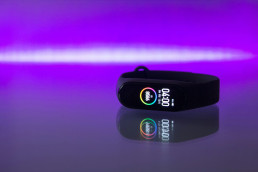
A client sends you a screenshot before training. Their recovery score is low, but they feel fine. The app suggests taking it easy, and they want to know whether you agree. What do you do?
It is tempting to give a quick answer. The client wants guidance and the number appears to tell a clear story. But before you change the plan, you need to know a little more. What is the score based on? Is that reading unusual for this person? How do they feel, and what has been happening in their life?
Those questions decide whether the information should change anything today, and how you respond.
Wearable data is useful in coaching. It is also the leading fitness trend for 2026, according to the American College of Sports Medicine. But the value is not on the screen. It comes from understanding what the number can and cannot tell you, and from using it to start a better conversation with your client.
What does the number actually represent?
A recovery score looks precise because it arrives as a number, a colour or an instruction. Underneath it sits a chain of decisions:
- A sensor measured one or more signals under particular conditions.
- Software processed those signals.
- An algorithm combined or weighted them.
- The result was compared with a reference and translated into a score designed to be easy to use.
Every step matters. Two devices may use different sensors, sampling methods, measurement windows or algorithms. Proprietary scores often combine several inputs without showing the user how much each one contributed. A change can reflect something meaningful, ordinary measurement variation, altered conditions, or all three at once.
That does not make the information useless. It means the score needs context and interpretation.
Begin with the person, then return to the data
Before you rely on the wearable, talk to the person. Ask how they feel before the number writes the story for them.
How did they sleep? What has training looked like? Has work been unusually demanding? Have they travelled, been unwell, drunk alcohol, eaten differently or measured at a different time? Is this a single reading or part of a pattern?
The client’s experience does not automatically overrule the device. The device does not automatically overrule the client.
Research into personal health data in coaching describes it as “not a clean plug-and-play situation”. Coach and client have to interpret it together before it becomes something they can act on. That shared interpretation is part of the work, and it is where the coach adds value the app cannot.
Look for patterns before verdicts
In our experience, a single low score attracts far more attention than it deserves. The person’s own baseline and trend are what give a reading its meaning. Has the measure moved away from their normal range? Has the change persisted? Do other observations point the same way? Is there a plausible reason for the pattern?
Even then, do not turn a trend into a diagnosis. A physiological signal can support a question, challenge an assumption, or suggest the current plan deserves a review. It rarely tells you, on its own, what caused the change or what this particular person should do next.
The more consequential the decision, the stronger the evidence and the professional authority it requires.
Understand enough science to know where confidence should stop
Coaches do not need to memorise the specification of every wearable. They do need enough scientific literacy to ask sensible questions:
- What is measured directly, and what is estimated?
- How reliable is that measure under the conditions it was collected in?
- Does the device perform the same during rest, sleep and movement?
- Is the client looking at a raw measure, a trend, or a manufacturer-created score?
- What other explanations could produce the same pattern?
This matters most with metrics like heart rate variability. Measurement method, timing, posture, breathing, artefact handling and the specific HRV metric all affect what appears on the screen. A shared label does not mean two numbers were produced the same way or mean the same thing.
Good scientific education does not turn a coach into a medical practitioner. It helps them explain uncertainty honestly, stay within their scope, and recognise when a signal deserves referral. That is professional maturity.
Protect the client's relationship with the data
There is a real balancing act to be had with wearables.
On the one hand, wearables can encourage reflection and help people notice patterns they would otherwise miss. On the other hand, they can also become a daily judgement.
For example, a client may wake up feeling reasonably well, see a poor score and immediately decide the day has gone wrong. Another may use a high HRV score to dismiss signs that they are tired or unwell. Some begin checking repeatedly or feel they have failed when a metric moves in the wrong direction.
The coach sets the tone of that relationship. Treat the number as information, not a grade. Come to it with curiosity. Look at it over time and in context. Help the person decide what, if anything, it changes today.
Data should increase understanding and agency. If it is creating anxiety, dependence or rigid behaviour, that deserves attention too.
Six questions for the coaching conversation
When a client brings you wearable or recovery data, ask:
- What was measured, and how was the score created?
- Were the measurement conditions consistent enough to compare?
- How does this reading compare with the person’s own pattern over time?
- What was happening in their training, health and wider life?
- Do the data and the person’s experience support, challenge or complicate one another?
- What decision is being considered, and is it within your professional scope to make it?
Sometimes the result is a small adjustment. Sometimes you keep the plan and observe. Sometimes the right response is to pause and involve an appropriate healthcare professional. The quality is in the reasoning, not the reaction.
Coaches need an ecosystem beneath this responsibility
Modern coaches are being asked to understand recovery, sleep, stress, behaviour, wearable data and wider health, while still delivering excellent work in their own specialism. That is a lot of knowledge to hold alone, and a lot of judgement to make on your own, client by client, with a screenshot and a WhatsApp message.
This is one of the reasons the 360 OS™ Practitioner Programme exists. It gives coaches the physiology, measurement and coaching literacy to know what a wearable signal can and cannot mean, and to say so with confidence.
The rest of 360 OS™ does the part that education alone cannot. The 360 App gives your client a consistent, properly measured signal instead of a proprietary score you cannot see inside. The Private Member Platform gives them the right explanation at the moment they need it. The methodology gives you a repeatable way to bring the data, the person and the conversation together, without every reading becoming a new problem to solve from scratch.
As wearable data becomes more common, the coach who can interpret it well becomes more valuable, not less. That is the coach we built 360 OS™ for.
Explore the 360 OS™ Practitioner Programme.